
BaZi animals: what they mean, how they relate and what their elements reveal
A clear, thorough guide to the animals in BaZi: their relationships, their elements, and how to use this knowledge as a practical tool for self-knowledge.
In short
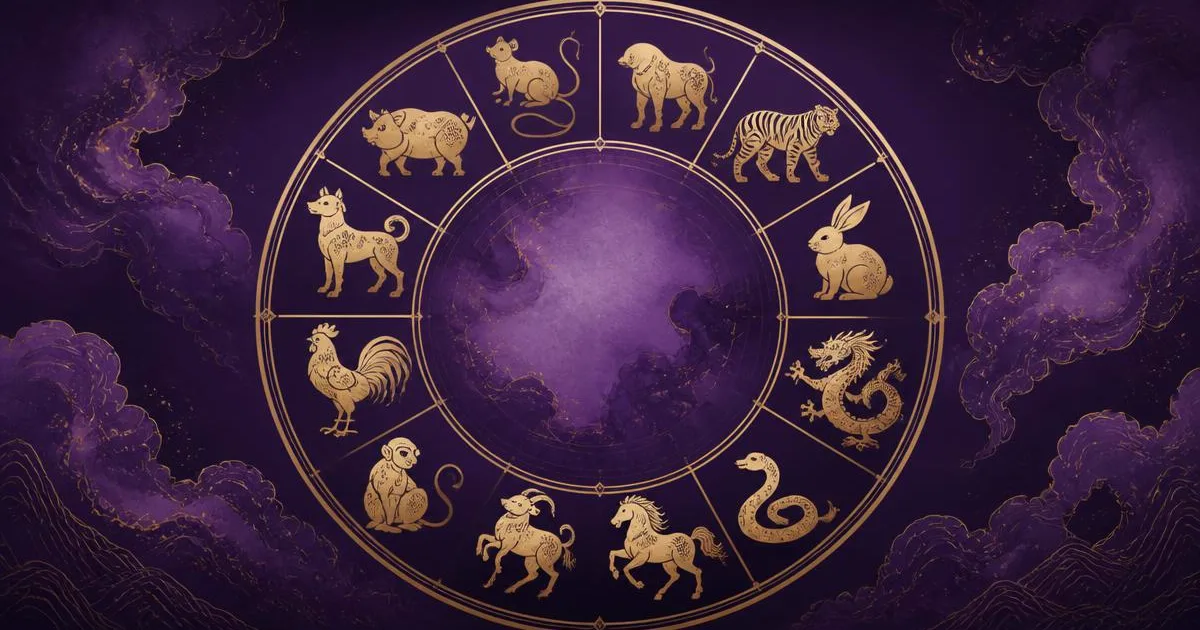
In BaZi, the animals are not read as simple Chinese zodiac signs or as loose labels. Each animal represents an Earthly Branch — a part of the temporal and energetic system from which the chart is built. Talking about the animals in BaZi means talking about rhythms, relationships, tensions, affinities and patterns that form part of a personal map.
Understanding the BaZi animals helps you read how energy moves within a chart. Some cooperate, some clash, some create indirect tension and some form larger elemental structures. Used with judgment, this knowledge is not for labeling anyone rigidly, but for better understanding inner dynamics, relational rhythms and ways of acting.
What are the animals in BaZi?
In BaZi, the animals correspond to the twelve Earthly Branches. They are one of the fundamental components of the BaZi chart and its Four Pillars of Destiny, alongside the Heavenly Stems. Each Branch is associated with an animal, a temporal rhythm, a season or seasonal transition, and a specific energetic quality.
This means the animals in BaZi should not be read as simple personality "signs". They are relational pieces within a wider system. Their meaning depends on where they appear in the chart, what they combine with, what they clash with and which elements they activate — much like the way aspects are read in a birth chart.
Is your animal the one you think?
Before going further, it is worth settling the question that brings many people here: the animal you have read on other sites may not be the one that belongs to you in BaZi. This happens in two situations above all.
If you were born in late January or early February
The BaZi year does not start on 1 January, nor necessarily at Lunar New Year. The majority convention starts it at Li Chun (立春), which falls between 3 and 5 February. Lunar New Year, by contrast, moves between 21 January and 20 February.
Because these are two different boundaries, every year there is a stretch of days where they disagree. In 1990, Lunar New Year fell on 27 January and Li Chun on 4 February: for those eight days the lunar calendar already said Horse while Li Chun still said Snake (1989, Ji Si — Earth Snake). Someone born on 30 January 1990 is a Horse on many websites and a Snake in a BaZi chart calculated from Li Chun.
The gap works in the other direction too. In 2015, Li Chun was on 4 February and Lunar New Year on the 19th: between those two dates Li Chun was already in the Goat while the lunar calendar was still in the Horse of 2014.
"Metal Horse" and "Earth Horse" can both be correct
The second discrepancy is not about dates but about layers. 1990 is Geng Wu (庚午). 庚 is yang Metal, hence "Metal Horse". That same pillar also carries a Na Yin classification: 路旁土, "roadside earth", hence "Earth Horse".
These are not two years competing for the same slot. They are two layers of the same pillar. Na Yin is a separate system, used traditionally for compatibility and date selection: it is not the element of the Heavenly Stem, and it is not automatically the favorable element of the chart.
One very common error follows from this: taking the Na Yin element and deriving "lucky colors" from it. They are different things.
The detail of how each boundary is calculated, and which criteria Ovinchi uses, is in the guide to BaZi and its Four Pillars of Destiny.
Why the BaZi animals are not just the Chinese zodiac
Although they share the same twelve animals, BaZi uses them far more deeply than the popular Chinese zodiac does. The usual Chinese horoscope looks at the animal of the year. BaZi analyzes year, month, day and hour, so several different animals can appear within one chart.
That changes the reading completely. It is no longer a single symbolic identity but a system of relationships. One animal may describe environment, another a way of acting, another more intimate layers, and another inner rhythms or deeper aspects of experience.
To really understand the animals in BaZi, you have to step out of the simplified logic of the year sign and into the logic of the whole chart.
The twelve Earthly Branches and their animals
The twelve Earthly Branches are the foundation of the animals in BaZi. Each is associated with an animal and a main element. That association is not decorative: it is part of the internal language of the system.
| Branch | Animal | Element | Indicative meaning |
|---|---|---|---|
| 子 (Zi) | Rat | Water | Strategy, circulation, beginnings |
| 丑 (Chou) | Ox | Earth | Persistence, patience, building |
| 寅 (Yin) | Tiger | Wood | Launch, courage, expansion |
| 卯 (Mao) | Rabbit | Wood | Bonding, diplomacy, fine adjustment |
| 辰 (Chen) | Dragon | Earth | Transition, breadth, change of phase |
| 巳 (Si) | Snake | Fire | Focus, calculation, practical intuition |
| 午 (Wu) | Horse | Fire | Action, exposure, vitality |
| 未 (Wei) | Goat | Earth | Care, creativity, cohesion |
| 申 (Shen) | Monkey | Metal | Technique, versatility, execution |
| 酉 (You) | Rooster | Metal | Precision, order, discernment |
| 戌 (Xu) | Dog | Earth | Boundaries, responsibility, support |
| 亥 (Hai) | Pig | Water | Integration, rest, depth |
What role do the elements play in the BaZi animals?
Each animal in BaZi expresses a main energy tied to one of the five elements: Wood, Fire, Earth, Metal and Water. This matters because the relationship between animals is not understood only through symbolic affinity, but also through the logic of the elements.
- Water animals tend to speak of movement, fluidity, strategy or depth
- Wood animals are usually associated with growth, expansion, relational drive or development
- Fire animals tend to connect with visibility, action, intensity or presence
- Earth animals usually relate to support, structure, care, transition or stability
- Metal animals are linked to precision, technique, discernment, order or execution
Understanding this stops you reading the animals flatly. The same link between two animals is not interpreted the same way if it is favoring a dynamic of growth, of consolidation, of tension or of cutting away.
Animals by element, at a glance
| Element | Associated animals |
|---|---|
| Water | Rat, Pig |
| Wood | Tiger, Rabbit |
| Fire | Snake, Horse |
| Earth | Ox, Dragon, Goat, Dog |
| Metal | Monkey, Rooster |
How do the animals relate to each other in BaZi?
In BaZi the animals are never analyzed in isolation. What matters is how they interact. Some relationships generate cooperation, others tension, others indirect wear, and others more complex energetic structures.
The best-known relationships between animals in BaZi are:
- Combinations
- Clashes
- Harms
- Punishments
- Triads, or elemental structures
Combinations between animals
Combinations show affinities or a tendency to integrate between two animals. In interpretive terms, they can suggest support, cooperation, the capacity to join forces, or an ease in generating a particular energetic quality.
| Combination | Main tendency |
|---|---|
| Rat + Ox | Consolidation, foundation, building |
| Tiger + Pig | Growth, expansion, momentum |
| Rabbit + Dog | Cohesion, warmth, affinity |
| Dragon + Rooster | Order, concreteness, structure |
| Snake + Monkey | Strategy, applied intelligence, adaptation |
| Horse + Goat | Harmonisation, mutual support, integration |
Clashes between animals
Clashes indicate friction, movement, conflicting rhythms or a need for readjustment. They matter because they usually signal change, tension, or difficulty holding a stable structure without revisiting something.
| Clash | Indicative reading |
|---|---|
| Rat ↔ Horse | Tension between strategy and direct action |
| Ox ↔ Goat | Clash between structure and sensitive adaptation |
| Tiger ↔ Monkey | Tension between impulse and calculation |
| Rabbit ↔ Rooster | Tension between diplomacy and critical precision |
| Dragon ↔ Dog | Tension between expansion and limit |
| Snake ↔ Pig | Tension between control and surrender |
Harms between animals
Harms tend to describe indirect conflicts, relational wear, or tensions less visible than clashes. They do not always show up head-on, but they can produce discomfort, misunderstanding or a sense of sustained friction.
| Harm | Indicative reading |
|---|---|
| Rat ↔ Goat | Wear between strategy and sensitivity |
| Ox ↔ Horse | Rigidity meeting impulse |
| Tiger ↔ Snake | Tension between expansion and control |
| Rabbit ↔ Dragon | Mismatch between subtlety and breadth |
| Monkey ↔ Pig | Tension between calculation and openness |
| Rooster ↔ Dog | Criticism, high demands or moral friction |
Punishments between animals
Punishments are configurations of more complex tension. They sometimes point to reactivity, repeating patterns, inner conflicts, or dynamics that worsen when they are not noticed in time.
Among the best known are:
- Tiger, Snake and Monkey
- Ox, Dog and Goat
- Repetitions of certain animals in specific contexts
Triads and elemental structures
Beyond pairwise relationships, BaZi has groups of three animals that form wider elemental structures. These triads help explain how different Branches can reinforce the same energy.
| Triad | Element reinforced |
|---|---|
| Monkey + Rat + Dragon | Water |
| Pig + Rabbit + Goat | Wood |
| Tiger + Horse + Dog | Fire |
| Snake + Rooster + Ox | Metal |
How to interpret these relationships with judgment
Knowing that two animals combine or clash is not enough on its own to read a chart well. You always have to look at:
- Which pillar each animal appears in
- Which Heavenly Stems they live alongside
- Whether the element is being strengthened or weakened
- Whether the relationship repeats
- What function it serves within the whole
Three simple relational readings
These examples are illustrative. They do not correspond to real people and exist only to explain how relationships between animals work in BaZi.
Illustrative example
A combination that stabilises
Pillars: Year: Rat · Month: Ox · Day: Yang Wood · Hour: Rabbit
Brief interpretation: The presence of Rat and Ox suggests a combination associated with consolidation and foundation. Added to a Wood energy, it can describe someone with initiative who needs structure in order to grow solidly.
In practice: Clear habits, planning and processes sustained over time suit them well.
Illustrative example
A clash that forces a readjustment
Pillars: Year: Horse · Month: Rat · Day: Yin Earth · Hour: Rooster
Brief interpretation: Here there is a clear clash between Rat and Horse. The chart may show tension between calculation and direct action, or between the need for strategy and the urge to move.
In practice: Better not to rush decisions, and to build in some margin before acting.
Illustrative example
A triad that reinforces a direction
Pillars: Year: Tiger · Month: Horse · Day: Dog · Hour: Yin Metal
Brief interpretation: Tiger, Horse and Dog form a Fire triad. This can reinforce visibility, momentum, exposure and movement.
In practice: This person may be very good at getting things moving, but needs to watch for burnout, pace and overexposure.
What understanding the BaZi animals offers for self-knowledge
Understanding the animals in BaZi can help you:
- Spot relational patterns within your chart
- Better understand inner tensions or rhythms that keep repeating
- Observe how your energy cooperates or gets blocked
- Distinguish between phases of expansion, consolidation, change or friction
- Use the symbolism as a tool for reflection rather than as a closed label
At Ovinchi
Understanding the BaZi animals is valuable when it is used to see your own patterns, inner rhythms and the dynamics that come alive within your personal map more clearly. It is not about labeling you. It is about observing better.
What not to do with this information
It also matters to use this knowledge with judgment. Avoid:
- Reducing a person to a single animal
- Reading clashes as misfortunes
- Reading combinations as a guarantee of total harmony
- Using loose lists without context
- Making important decisions on this basis alone
- Forgetting that BaZi is a symbolic reading, not a modern exact science
Conclusion
The animals in BaZi are far more than eye-catching symbols or equivalents of the popular Chinese zodiac. They are Earthly Branches with a function inside a system of relationships. Understanding them properly means looking at elements, links, combinations, clashes and context.
Studied with judgment, the BaZi animals help you read a chart with much more depth. And that depth, put into practice, can become a useful tool for self-knowledge and conscious observation.
Frequently asked questions about the BaZi animals
What do the animals mean in BaZi?
In BaZi the animals represent the twelve Earthly Branches. They are not simply signs but relational pieces within the chart, expressing rhythms, elements and energetic dynamics.
Are the BaZi animals the same as the Chinese horoscope?
No. Although they share the same twelve animals, BaZi uses them across all four pillars of the chart — year, month, day and hour — rather than only as a year sign.
Which element does each BaZi animal have?
Each animal is associated with a main element. The Rat is linked to Water, the Tiger to Wood, the Horse to Fire and the Rooster to Metal, for example.
What does it mean when two animals clash in BaZi?
It means there is energetic tension or friction between those Branches. It does not imply doom, but a need for adjustment, movement or review.
What are combinations between animals in BaZi?
They are relationships between Branches showing affinity or a tendency to integrate. Their interpretation depends on the full context of the chart.
What is the point of understanding the animals in a BaZi chart?
It helps you understand patterns, rhythms, tensions and affinities within the chart, and use that reading as a tool for self-knowledge.
Self-knowledge
Explore your BaZi chart with Ovinchi
If you would like to explore your BaZi chart within a wider approach to self-knowledge, Ovinchi lets you fold it into your holistic profile and use it as a practical tool for observing yourself and deciding with more awareness.
Keep reading
Self-knowledge
What is BaZi: a clear guide to the Four Pillars of Destiny and how to read your chart
Discover what BaZi is, how a Four Pillars chart is built and how to interpret it with discernment for better self-knowledge.
18 minSelf-knowledge
Birth chart: what it is, how it's calculated and how to use it to know yourself better
Discover what a birth chart is, how it's precisely calculated and how to interpret planets, signs, houses and aspects for better decisions.
16 minSelf-knowledge
How we unify BaZi, birth chart, Human Design, palmistry and graphology for a clear answer
Discover how Ovinchi combines five self-knowledge disciplines to build an integrated, coherent and easy-to-understand interpretation.
20 minKeep exploring